Photo by John Edgar on Unsplash
How to Unclog a Toilet or Sink
Most clogs can be cleared in a few minutes with the right tool and no harsh chemicals. Here is how to unclog a toilet, a kitchen sink and a bathroom sink, and the signs that the problem is deeper in the pipes.
The short answer
- Toilet: flange plunger first, then a toilet auger. Stop flushing if the water is rising.
- Kitchen sink: cup plunger with the other drain blocked, then clean the trap or use a small drain snake.
- Bathroom sink: pull and clean the stopper, which is where most hair clogs sit.
- Several drains slow at once: that is the main line. Call a plumber.
Toilet about to overflow? Do not flush again. Lift the tank lid and push the flapper down, or turn the shut-off valve behind the toilet clockwise. Sewage coming up in a floor drain or tub needs our emergency plumbing service.
What you need
- Flange plunger for toilets (the one with a soft flap under the cup).
- Cup plunger for sinks and tubs (flat bottom).
- Toilet auger (closet auger), which has a guard that protects the bowl.
- Small drain snake or a plastic hair-catching tool for sinks.
- Rubber gloves, a bucket and old towels.
How to unclog a toilet
- Stop the water. If the bowl is nearly full, turn the shut-off valve behind the toilet clockwise and wait for the level to drop.
- Get a seal. Put the flange of the plunger into the drain hole. There should be enough water to cover the cup. Add a little if needed.
- Plunge steadily. Push down gently first to get the air out, then use firm push-and-pull strokes for 15 to 20 seconds. The pull matters as much as the push.
- Check the drain. If the water rushes out, flush once with the lid down and watch. If not, repeat a few times.
- Use the auger. Put the bent end into the bowl, crank the handle to feed the cable in, then pull it back. It breaks up or grabs the clog.
If an auger does not clear it, something may be stuck in the toilet itself, or the clog is further down the line. Our toilet repair service can pull the toilet and clear it.
How to unclog a kitchen sink
- Turn off the disposal at the switch. If it hums but will not spin, it may be jammed, not clogged.
- Block the other side. On a double sink, plug the second drain or hold a wet rag over it.
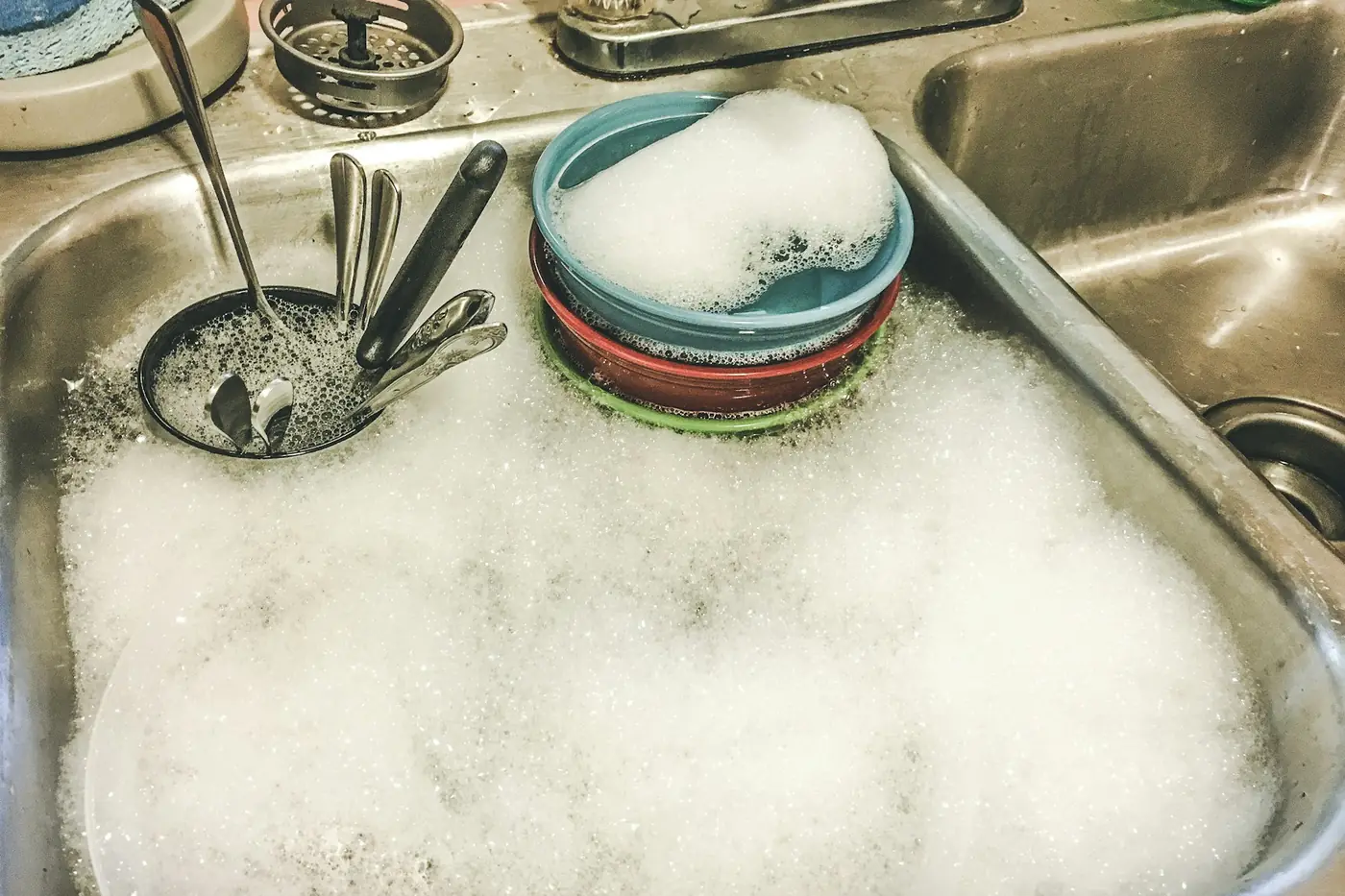
- Plunge. Fill the sink with a few inches of water and use a cup plunger with quick, strong strokes.
- Clean the trap. Put a bucket under the U-shaped pipe, loosen the slip nuts by hand and clean out the grease and food.
- Snake the wall pipe. If the trap is clear, feed a small snake into the pipe going into the wall.
Run hot water for a minute after the sink drains to check the flow. Grease is the main cause of kitchen clogs. It goes down as a liquid and hardens in the pipe. Wipe greasy pans with a paper towel before washing, and put food scraps in the trash.
How to unclog a bathroom sink
Most bathroom sink clogs are hair and soap caught on the stopper. Lift the stopper out, or loosen the nut on the pivot rod under the sink to free it, then clean it. A plastic hair-catching tool pulls out what is left in the drain. Plunging with the overflow hole covered by a wet rag helps if the clog is lower down. For a leaking sink or a broken stopper, see our faucet and sink repair service.
What not to do
- Do not keep flushing a clogged toilet. Each flush adds water to a bowl that cannot drain.
- Do not mix drain cleaners, or use them after you have plunged. The splash can burn skin and eyes.
- Do not pour boiling water into a toilet. It can crack the porcelain.
- Do not flush wipes, even ones labeled flushable, paper towels, cotton swabs or dental floss.
- Do not use a metal coat hanger in a toilet. It scratches the bowl.
When a clog is a bigger problem
One slow drain is usually a clog close to the fixture. When several drains act up together, the problem is further down in the main drain or the sewer line. Watch for these signs:
- The toilet gurgles or the water rises when you run the sink or the washer.
- Water backs up into the tub, shower or basement floor drain.
- Drains all over the house are slow at the same time.
- A sewage smell in the basement or yard.
- The same toilet clogs again and again.
Those signs call for a camera look at the line. Our drain cleaning service clears main lines, and our sewer line repair service fixes roots, breaks and sagging pipe. Older homes in York County with clay or cast iron sewer lines see this most often.
Clogged Toilet and Sink: FAQs
What is the fastest way to unclog a toilet?
A flange plunger, the kind with a soft flap on the bottom, used with steady push-and-pull strokes for 15 to 20 seconds. Make sure there is enough water in the bowl to cover the plunger cup. If that does not work after a few tries, use a toilet auger.
Will boiling water unclog a sink?
Hot tap water can help soften a small grease clog in a kitchen sink. Do not pour boiling water into a toilet, because it can crack the porcelain, and be careful with plastic drain pipes.
Are chemical drain cleaners safe?
They can damage older pipes, burn skin and eyes, and make the job dangerous if a plumber later has to open the drain. A plunger or drain snake is safer. Never mix drain cleaners with each other.
Why does my toilet keep clogging?
Common reasons are too much paper at once, things that should not be flushed, an older low-flow toilet that does not flush hard, or a partly blocked drain or sewer line. If it clogs often, have the line checked.
When is a clog a sewer line problem?
When more than one drain is slow or backs up at the same time, like a toilet gurgling when the sink drains, or water coming up in the shower or floor drain. That points to the main drain or sewer line, not a single fixture.
Can I use a plunger on a double kitchen sink?
Yes. Plug or hold a wet rag over the other drain first, so the pressure goes into the clog instead of out the other side. Also block the dishwasher hose connection if you can.
Plumbing problem right now?
Call York Plumbing Pros, we answer 24/7
Tell us what is going on and we will get a plumber headed your way fast.