
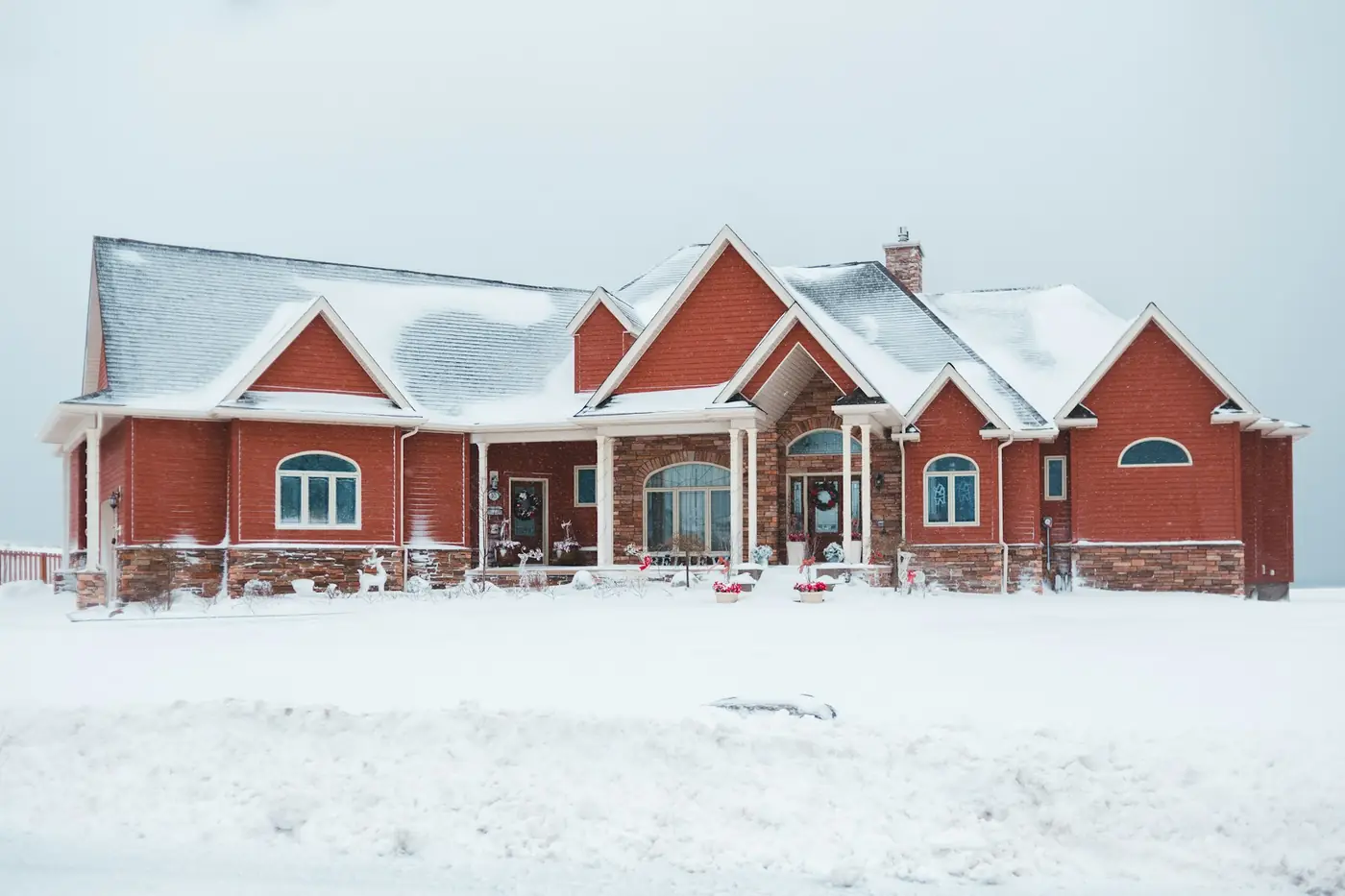
Photo by Erik Mclean on Unsplash
How to Winterize Your House Plumbing
A frozen pipe can split and flood a basement overnight. Most of that damage is stopped by an hour of work in the fall. Here is the checklist, step by step.
The short answer
- Unhook garden hoses, shut off the inside valve to outdoor faucets and drain them.
- Wrap pipes in crawl spaces, garages, attics and outside walls with foam sleeves.
- Seal drafts near pipes and close crawl space vents.
- Flush the water heater and test the sump pump.
- Find your main water shut-off valve and make sure it turns.
- Plan your heat: same setting day and night, never below 55°F when away.
When to winterize
Do it before the first hard freeze. Water freezes at 32°F, and pipes in cold spots like crawl spaces, garages and outside walls are the first to go. Pipes inside a heated home are safer, but they can still freeze when it drops toward 20°F, especially if it stays that cold for hours.
If you are not sure how cold it will get this week, check your ZIP code with our free pipe freeze checker. It reads the live hourly forecast and tells you your risk for each night.
Your fall plumbing checklist, room by room
Outside
- Unhook and store garden hoses
- Shut off and drain outdoor faucets
- Blow out sprinkler lines
- Clear the sump pump discharge line
Basement and crawl space
- Wrap exposed pipes with foam sleeves
- Close crawl space vents
- Seal gaps where pipes enter
- Test the sump pump
Inside the house
- Flush the water heater
- Know which sinks are on outside walls
- Find and test the main shut-off valve
- Fix dripping faucets and running toilets
Garage and attic
- Keep the garage door closed in cold weather
- Insulate pipes running to a garage water heater or sink
- Cover attic pipes with insulation
Step 1: Outdoor faucets and hoses
Outdoor faucets (also called hose bibs or spigots) freeze first. The worst part is that the damage hides inside the wall. You find it in spring, when you turn on the hose and water pours into the basement.
- Unhook every garden hose. A hose left on traps water in the faucet, even a frost-free one.
- Find the inside shut-off valve for each outdoor faucet. It is usually on the pipe just inside the wall, often in the basement ceiling or a utility room.
- Close that valve, then go outside and open the faucet to let the water drain out.
- Leave the outside faucet open for the winter so any water left can expand without splitting the pipe.
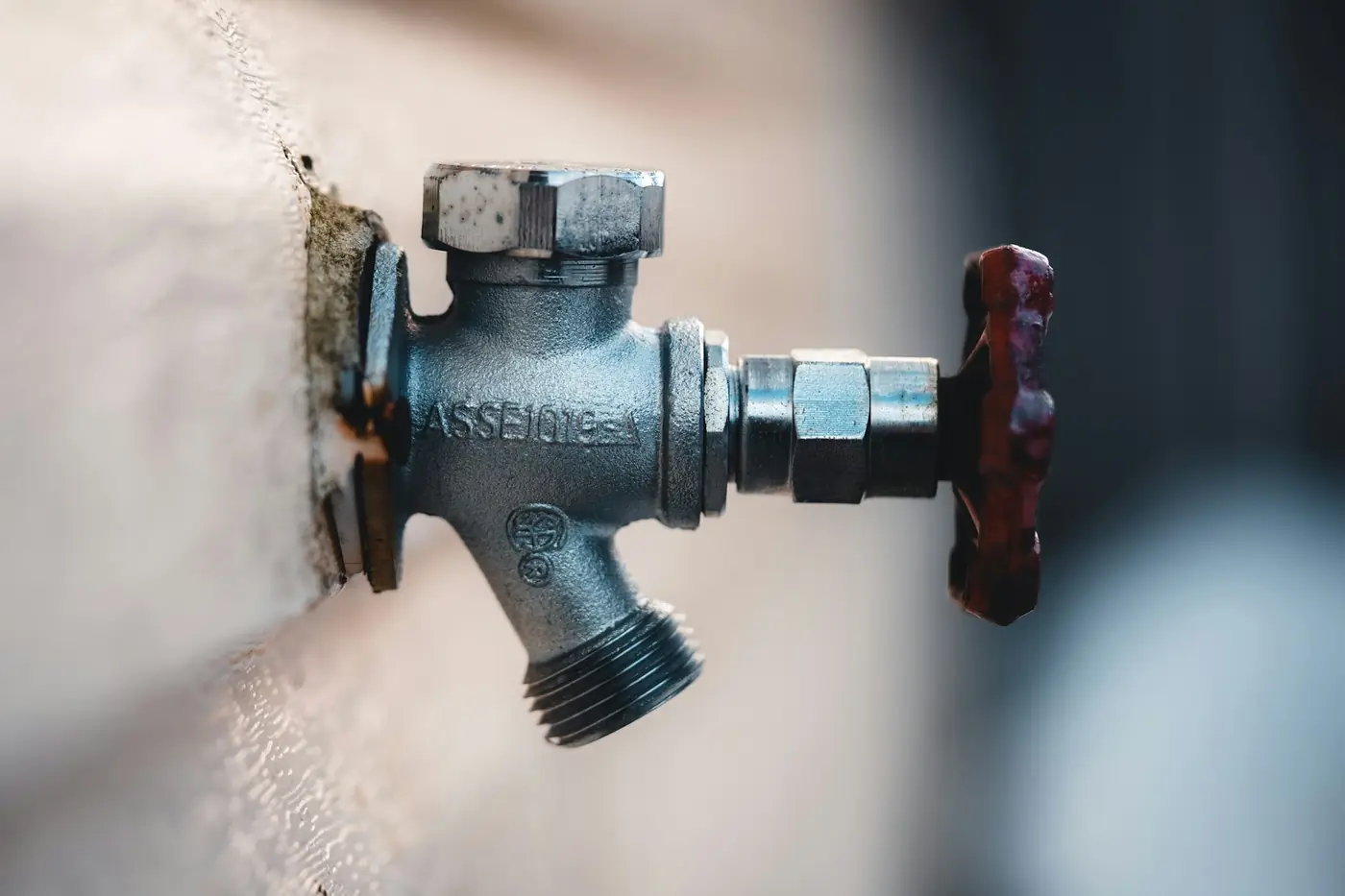
No inside shut-off valve? Use an insulated faucet cover on very cold nights, and think about having a frost-free faucet put in. If a faucet already leaks or drips when it is off, our faucet repair service can fix or replace it before winter.
Step 2: Insulate pipes in cold spots
Walk through the crawl space, unheated basement, garage and attic. Any water pipe you can see in those spaces needs protection. Foam pipe sleeves from a hardware store slide over the pipe and close with a peel-and-stick seam. Pay extra attention to pipes near outside walls, near vents and where the main water line comes into the house.
For pipes that freeze every year, heat cable (heat tape) can help. Use only a product made for water pipes, follow the maker's instructions exactly and plug it into a protected outlet. Old or damaged heat tape is a fire risk, so check it every fall.
Step 3: Seal drafts and close vents
Cold air blowing on a pipe freezes it much faster than still air. Close crawl space vents for the winter, seal gaps around pipes where they pass through walls and floors, and fix broken basement windows. Keep the garage door closed if water lines run through the garage.
Step 4: Water heater and sump pump
Fall is a good time to flush the water heater. Draining a few gallons from the drain valve at the bottom clears out sediment that makes the heater work harder in winter. The U.S. Department of Energy suggests a setting of 120°F for most homes. If the drain valve leaks, the tank is rusty or the heater is over 10 years old, have our water heater repair service look at it now rather than in January. Water around the base is a warning sign. See our guide to a water heater leaking from the bottom.
Test the sump pump by pouring a bucket of water into the pit. The pump should turn on, empty the pit and shut off. Make sure the discharge pipe outside is clear and points water away from the house, because a frozen or blocked discharge line can back water into the basement. Our sump pump repair service can replace a weak pump or add a battery backup.
Step 5: Find your main water shut-off valve
If a pipe bursts, the first thing to do is shut off the water to the whole house. Find that valve now, before you need it, and make sure it turns. Our step-by-step guide shows where the main water shut-off valve usually is and how to turn it off.
Step 6: Plan your heat and cold-night routine
- Keep the thermostat at the same setting day and night during cold snaps.
- If you go away, keep the heat at 55°F or higher.
- On very cold nights, open cabinet doors under sinks on outside walls.
- Let a thin, steady drip run from faucets on outside walls.
Will your pipes freeze tonight?
Type your ZIP code to see the live forecast, your freeze risk and exactly when to start dripping faucets.
Check my freeze riskLeaving the house empty for the winter
A vacation home or an empty house with the heat off needs more than this checklist. Shut off the main water valve, open the faucets from the top floor down to drain the lines, and flush the toilets. The water heater, toilet tanks and drain traps also need attention. If any step is unclear, have a plumber do it the first time. A burst pipe in an empty house can run for days before anyone notices.
What to do if a pipe freezes anyway
If a faucet gives only a trickle on a cold morning, a pipe is likely frozen. Keep the faucet open and warm the pipe slowly with a hair dryer or warm towels. Never use an open flame. If you see water, shut off the main valve right away and call us. Our burst pipe repair service thaws frozen lines and fixes splits 24/7.
Winterizing Plumbing: FAQs
When should I winterize my plumbing?
Do it before the first hard freeze, when nights start dropping near 32°F. In most northern states that is late October or November. If a cold night is coming sooner, do the outdoor faucets and hoses first, since they freeze first.
Do frost-free outdoor faucets need to be winterized?
Yes, a little. A frost-free faucet only drains itself if the hose is taken off. With a hose attached, water stays trapped in the pipe and can freeze and split it inside the wall. Unhook the hose every fall.
What temperature should I keep my house in winter?
Keep the same setting day and night during cold snaps. If you go away, the American Red Cross says to keep the heat no lower than 55°F.
Should I drain my pipes if I leave for the winter?
For a home that will sit empty with the heat off or very low, yes. Shut off the main water valve and open the faucets to drain the lines. Toilets, the water heater and any traps also need attention, so many owners have a plumber do it the first time.
Is pipe insulation worth it?
Yes, for pipes in cold spots like crawl spaces, garages, attics and outside walls. Foam pipe sleeves are cheap and easy to put on. They slow heat loss but do not add heat, so on very cold nights you still need to drip faucets and keep the heat on.
Plumbing problem right now?
Call York Plumbing Pros, we answer 24/7
Tell us what is going on and we will get a plumber headed your way fast.