
Will My Pipes Freeze Tonight?
Type your ZIP code or city. We check the live hourly forecast for your area and tell you your pipe freeze risk and what to do before it gets cold.
- Live hourly forecast
- Any US ZIP or city
- Free, no sign-up
How our pipe freeze checker works
Three quick steps. No sign-up, no email, nothing to download.
1. Find your spot
Type your ZIP code, city or county, or tap Use my location. Tell us about your home if you want a sharper answer.
2. Read the live forecast
We pull the hour-by-hour forecast and any freeze warnings for your exact area from the National Weather Service.
3. Get your risk and a plan
You see your risk level, the coldest hour, how long it stays below the danger line and the steps to take before then.
The risk level depends on two things: how cold it gets and how long it stays cold. A quick dip to 30°F at sunrise is a small risk. Six hours at 20°F is a big one. Wind makes it worse for pipes on outside walls and under the house, so we count that too.
- NoneIt stays above freezing. Nothing to do.
- LowClose to freezing. Protect outdoor faucets and hoses.
- ModeratePipes in cold spots can freeze. Drip faucets and open cabinets.
- HighPipes are likely to freeze without protection. Do every step.
- SevereHard freeze. Unprotected pipes can burst. Act now.
At what temperature do pipes freeze?
Water freezes at 32°F. But the pipe inside your wall is not sitting in the outside air, so the real answer depends on where the pipe is.
Pipes in cold spots (outside walls, crawl spaces, garages, attics and mobile homes) can freeze once it drops to 32°F or below, and the risk climbs fast in the 20s.
Pipes inside a heated home are much safer. Research by the University of Illinois Building Research Council found that freezing in unheated spaces started when it got down to about 20°F outside. That is why 20°F is the line most plumbers watch.
| Where the pipe is | Start protecting at | Serious risk at |
|---|---|---|
| Outdoor faucets and hoses | 35°F | 32°F and below |
| Crawl space, garage, attic, outside walls | 32°F | 25°F or 6+ hours below 32°F |
| Mobile homes, or homes with no heat | 32°F | 25°F and below |
| Inside walls of a heated home | 20°F | 10°F or 6+ hours below 20°F |
These are the rules our checker uses. They are a guide, not a promise. Drafts, gaps in insulation and wind can freeze a pipe on a warmer night.
Why homes in warm states freeze sooner
In places where hard freezes are rare, pipes often run through attics, outside walls and slab edges with little insulation. So a 25°F night in Texas or Georgia can do more damage than the same night in Pennsylvania. If you live in a warm state and are not sure where your pipes run, our checker treats them as exposed to be safe.
How long does it take for pipes to freeze?
It depends on three things: how cold it is, how long it stays cold and how well the pipe is protected. Exposed pipes can freeze in a few hours of hard cold. Pipes inside heated walls can last through a cold night with no trouble.
The length of the cold matters as much as the low. That is why our checker shows how many hours you will spend below the danger line. Many hours below 32°F for exposed pipes, or below 20°F for inside pipes, is a red flag even if the low does not look extreme.
How long can a house go without heat before pipes freeze?
If your power or furnace goes out, the house cools down slowly. A well-sealed home holds heat for many hours. A drafty home, a mobile home or a home with pipes on outside walls loses it much faster. If the heat is off and it is below freezing outside, do not wait: drip the faucets, open the cabinets and, if the outage will be long, shut off the main water and drain the lines.
Which pipes freeze first?
Pipes freeze where cold air reaches them and house heat does not. Check these spots first:
- 1
Attic pipes. Common in warm states. The attic can be as cold as outside.
- 2
Pipes in outside walls, especially where insulation is thin or there are drafts.
- 3
Kitchen and bathroom sinks on outside walls. The closed cabinet keeps heat out.
- 4
Crawl spaces and unheated basements, where the main line comes in.
- 5
Garages, with lines to the water heater, washer or a utility sink.
- 6
Outdoor faucets and hoses. These freeze first, and a frozen faucet can split the pipe inside the wall.
Should I drip my faucets tonight?
Drip your faucets when the checker shows Moderate risk or higher. As a rule of thumb, drip faucets on outside walls once it is going below 32°F for several hours. If your pipes are inside heated walls, drip them when it goes below 20°F.
Dripping works because a frozen pipe does not burst where the ice is. It bursts from the water pressure that builds up between the ice and the closed faucet. A small drip lets that pressure out and keeps the water moving.
Which faucets
The ones on outside walls and the faucet farthest from where the water comes into the house. You do not need to drip every faucet.
How much
A thin, steady drip, a few drops a second. Drip cold for most faucets. Drip both hot and cold if both lines run through a cold spot.
What temperature should I keep my house?
Keep the heat at the same setting day and night during a cold snap. Turning it down at night saves a little on heating, but a burst pipe costs far more. If you are going away, the American Red Cross says to keep the heat at no lower than 55°F.
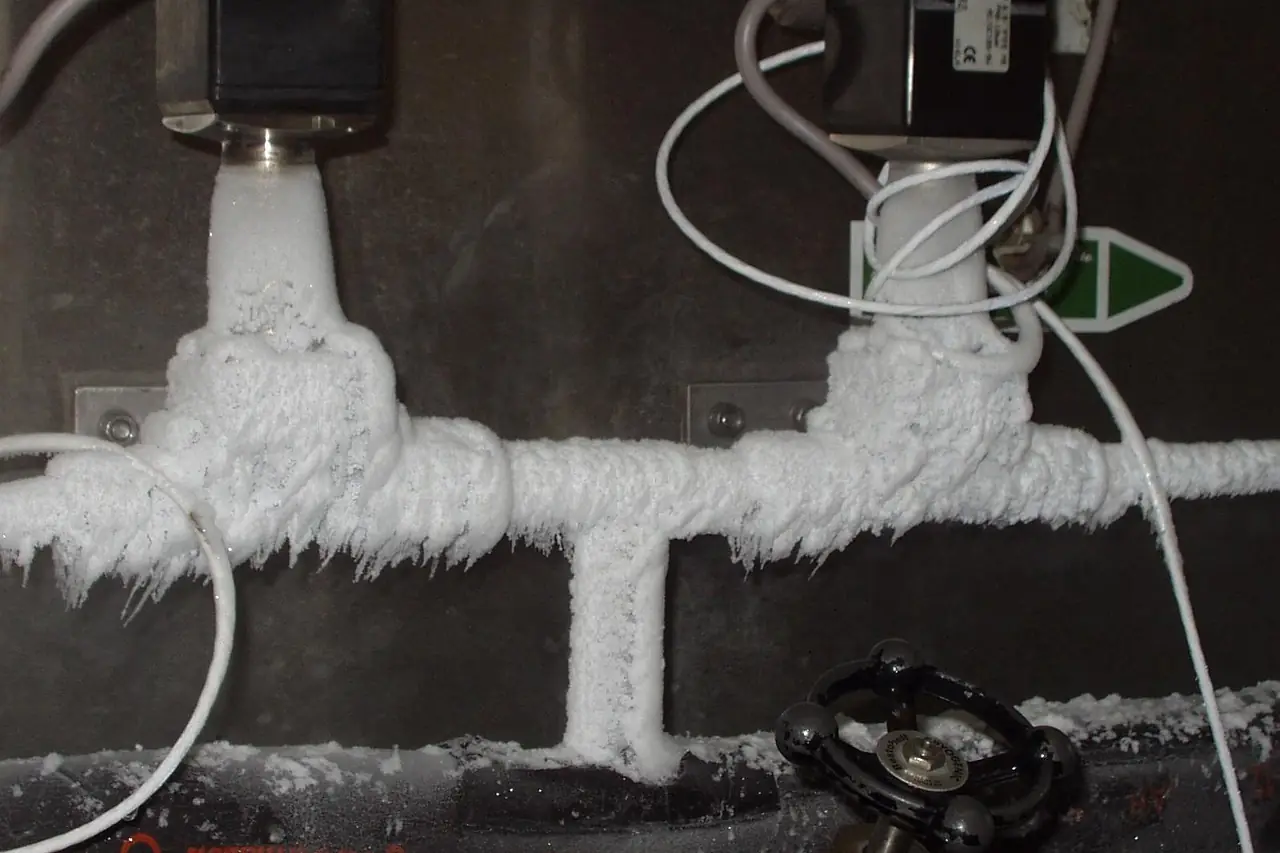
Freeze prep checklist for tonight
Most frozen pipes can be stopped with ten minutes of work before dark:
- Unhook garden hoses. Shut off and drain outdoor faucets if they have a shut-off valve inside.
- Keep the heat at 55°F or higher, and do not turn it down overnight.
- Open cabinet doors under sinks on outside walls.
- Let a thin drip run from faucets on outside walls.
- Keep the garage door closed if water lines run through the garage.
- Cover crawl space vents and seal drafts near pipes.
- Wrap pipes in cold spots with foam pipe sleeves. Towels work for one night.
- Find your main water shut-off and make sure it turns, so you can close it fast if a pipe bursts.
Outdoor faucets need extra care
An outdoor faucet with a hose still attached traps water in the pipe behind it. When that water freezes, it can split the pipe inside your wall. You often do not see the leak until you turn the hose on in spring and water pours into the basement. Take hoses off every fall.
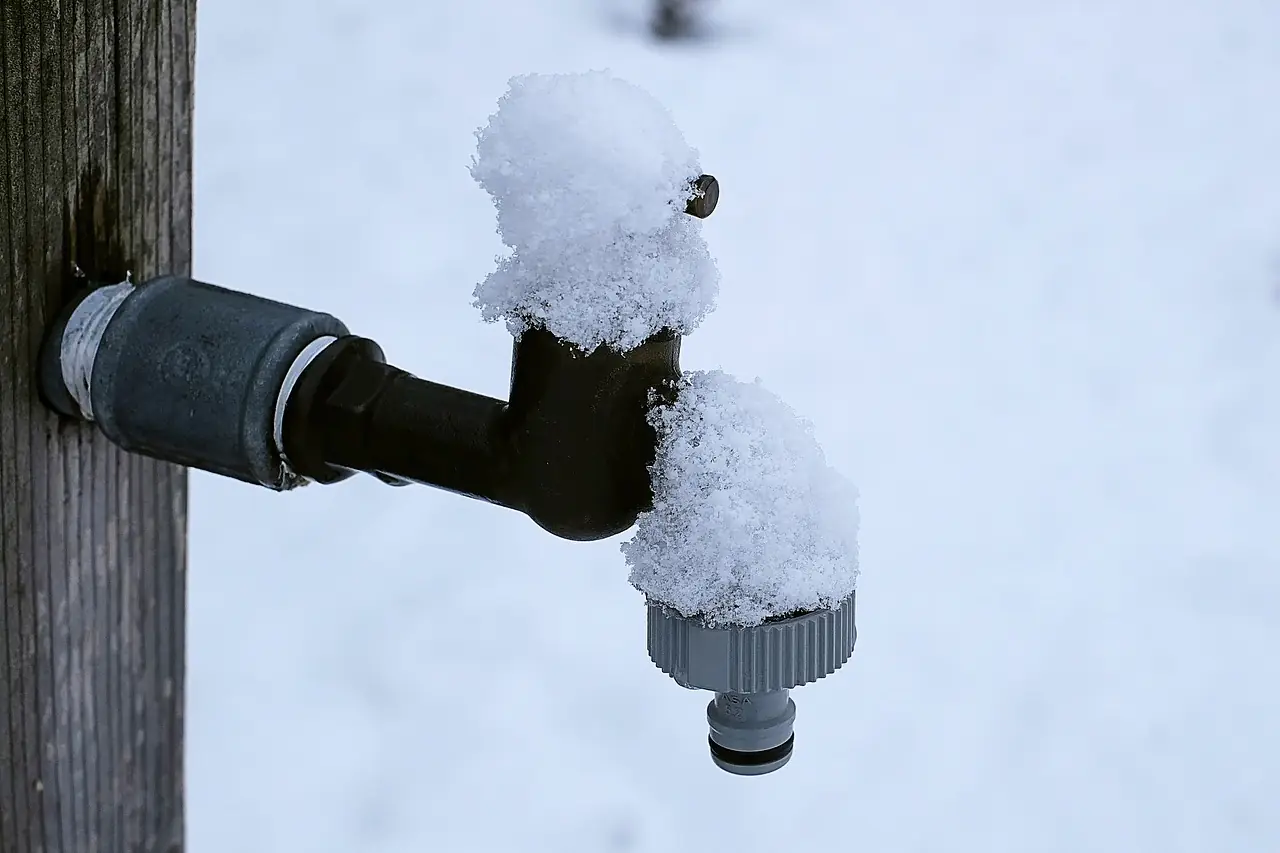
How to tell if your pipes are frozen
- You turn on a faucet and only a trickle comes out, or nothing at all.
- The toilet does not refill after a flush.
- You see frost on a pipe, or a pipe looks bulged.
- Only one faucet is dry while others work. The frozen part is on the line to that faucet.
If every faucet in the house is dry, the frozen spot is likely on the main line where it enters the house. That needs our water line repair service if the pipe has cracked.
My pipes froze. What now?
Act fast but stay calm. A frozen pipe that has not split yet can often be thawed safely.
- Open the faucet on the frozen line. As the ice melts, the water needs somewhere to go.
- Warm the pipe slowly, starting near the faucet and working back. Use a hair dryer, a heating pad or towels soaked in hot water.
- Keep going until full pressure comes back, then check the other faucets in the house.
- Watch for leaks as the pipe thaws. A split pipe often leaks only after the ice melts.
Never use an open flame. Do not thaw pipes with a torch, a propane or kerosene heater or any other open flame. It can start a fire and can make the pipe burst.
If you cannot find the frozen spot, cannot reach it, or the pipe is behind a wall, call us. We thaw frozen pipes and fix splits with our burst pipe repair service.
If a pipe bursts
Shut off the main water valve right away, then turn off power to any wet area if it is safe to reach the breaker. Open a faucet to drain the water left in the lines. Then call our emergency plumbing service. We answer 24/7. After the repair, our leak detection service can check for hidden leaks inside walls and ceilings.
Pipe Freezing FAQs
How cold does it have to be for pipes to freeze?
Water freezes at 32°F, so pipes in cold spots like crawl spaces, garages, attics and outside walls can start to freeze when it drops to 32°F or below. Pipes inside a heated home usually hold out longer. Research from the University of Illinois found that freezing in unheated spaces starts when it gets down to about 20°F outside.
Will pipes freeze at 28 degrees?
Pipes inside a heated home almost never freeze at 28°F. Exposed pipes can, especially if it stays that cold for several hours or the wind is blowing on them. Outdoor faucets and hoses are the first to go.
How long does it take for pipes to freeze?
There is no single number. Exposed pipes can freeze in a few hours of hard cold. Pipes inside heated walls can last a long time. The colder it is, the longer it lasts and the more wind there is, the faster pipes freeze. That is why our checker counts the hours below the risk line, not just the low.
Should I drip hot or cold water?
Drip the cold side for most faucets. If both the hot and cold lines run through a cold spot, like a sink on an outside wall, drip both. A thin, steady drip is enough.
Do PEX pipes freeze?
Yes. PEX can freeze just like copper. It stretches a little, so it is less likely to split, but it can still burst, and the fittings can fail. Protect PEX the same way you protect any other pipe.
Will frozen pipes thaw on their own?
They will once the air warms up, but waiting is risky. The pressure that builds while the pipe is frozen can split it, and you will not see the leak until the ice melts. Thaw it slowly and safely, or call a plumber.
Where does this pipe freeze checker get its data?
The forecast comes live from the National Weather Service, the official US weather service. ZIP code locations come from GeoNames. We turn the hourly forecast into a simple risk level using the freezing point and the 20°F research.
Does the pipe freeze checker work anywhere in the US?
Yes. Type any US ZIP code, a city and state like York, PA, or a county like York County, PA. You can also tap Use my location. The weather service does not cover places outside the United States.
Plumbing problem right now?
Call York Plumbing Pros, we answer 24/7
Tell us what is going on and we will get a plumber headed your way fast.